
In an age when technology is redefining every industry, the jewelry world—steeped in tradition and craftsmanship—is experiencing a digital transformation. At the heart of this shift lies a revolutionary technology: blockchain.
Whether you’re a luxury consumer, jewelry manufacturer, ethical sourcing advocate, or tech-savvy entrepreneur, understanding how blockchain is reshaping the jewelry industry is essential. This article explores what blockchain is, how it’s changing the jewelry industry, the ways businesses are adopting it, and real-world examples showcasing its impact.
What Is Blockchain?
Let’s start with the basics.
Blockchain is a digital ledger technology that securely records transactions across a network of computers. Unlike traditional databases, blockchain data is decentralized—meaning no single entity has complete control. Every transaction is timestamped, encrypted, and stored in a “block,” which is linked to previous blocks, forming a transparent and tamper-proof “chain.”
In simple terms, blockchain allows multiple parties to access a single version of the truth that cannot be altered without consensus.
Key features include:
- Transparency – all participants see the same data.
- Security – once data is added, it’s nearly impossible to alter.
- Traceability – every step of a product’s journey can be tracked.
- Decentralization – no central authority controls the system.
Originally developed to support cryptocurrencies like Bitcoin, blockchain has since found applications in supply chain management, healthcare, real estate, and now, jewelry.
How blockchain is changing the jewelry industry
The jewelry market has long struggled with challenges like counterfeit products, conflict diamonds, lack of supply chain visibility, and customer trust. Blockchain technology offers solutions to all of these problems, fostering a new era of trust, traceability, and transparency.
How the usual way of gemstones looks like:
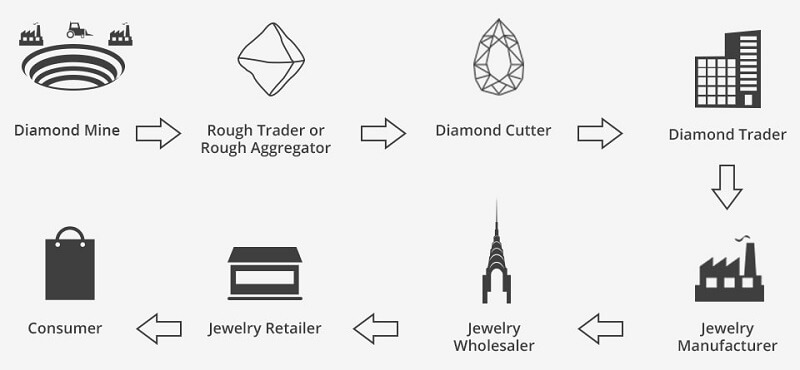
And now let’s see how the way looks with blockchain technology added:
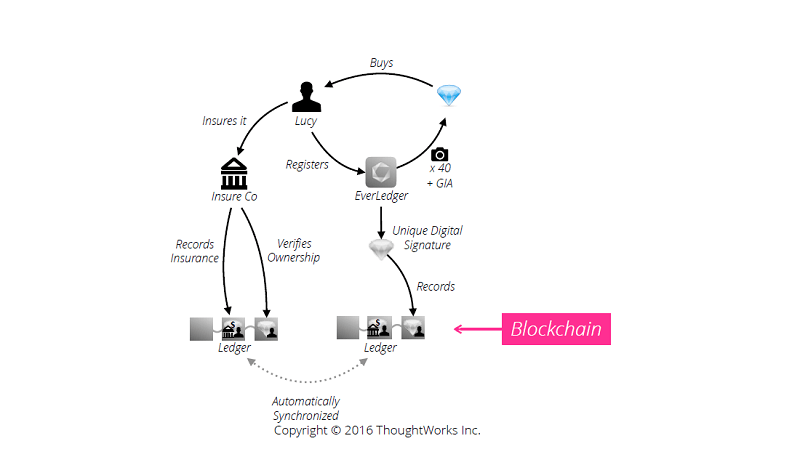
Ethical sourcing and transparency
Consumers today care about where their jewelry comes from. They want to be sure their diamonds and metals are conflict-free, ethically mined, and environmentally responsible. Blockchain makes it possible to trace a gemstone or precious metal’s journey from mine to market.
Every step, from extraction, cutting, polishing, certification, transportation, to retail, can be recorded on the blockchain. This record can then be accessed by consumers, helping them make informed, ethical purchases.
Combatting counterfeit jewelry
High-end jewelry is often a target for counterfeiters. Blockchain-enabled certificates of authenticity are revolutionizing how jewelers combat fake products. By assigning a unique digital ID to each item, blockchain ensures that the origin and ownership of a piece can be verified instantly, protecting both brands and consumers.
Enhancing consumer trust
By providing verifiable records of a product’s journey, jewelers build greater trust with customers. Blockchain eliminates guesswork and brings proof to marketing claims like “conflict-free,” “handcrafted,” or “sustainably sourced.”
Efficient supply chain management
For manufacturers and suppliers, blockchain offers more than just transparency. It also boosts efficiency. Real-time tracking reduces delays, minimizes fraud, and streamlines inventory and logistics.
How jewelers and businesses use blockchain in jewelry
Blockchain isn’t just a buzzword—it’s being implemented in real business operations today. Here’s how different stakeholders are using it:
Jewelry brands and retailers, including luxury brands, utilize blockchain to safeguard their reputations and enhance product authenticity. By digitizing their supply chains, they can show customers exactly where their materials came from and how each piece was crafted.
Some even provide scannable QR codes on product tags. With a quick scan, buyers can access the item’s full journey, enhancing both storytelling and sales.
Miners and suppliers – mining companies are using blockchain to certify the origin of raw materials. By recording every transaction on-chain, they ensure that diamonds or gold come from certified mines that follow labor and environmental standards. This is especially critical for meeting regulatory requirements and corporate responsibility goals.
Certifying authorities – gem labs and certifiers use blockchain to issue digital certificates of authenticity. These certificates are more secure than paper ones (which can be forged or lost) and allow easy verification of gemstone quality, cut, color, clarity, and origin.
Customers – end users benefit most. Buyers can confirm that a diamond is conflict-free, see its entire supply chain history, and hold a digital certificate that’s permanently stored and immune to loss or tampering.
Insurance and resale – blockchain makes it easier to insure jewelry or resell it later. The item’s value and history are easy to verify, reducing fraud and speeding up claims or resale approvals.
Real-world examples of blockchain in jewelry
Several companies and initiatives are already proving blockchain’s power in the jewelry world. Let’s take a closer look:
One of the most prominent blockchain initiatives in jewelry is Tracr, launched by diamond giant De Beers. Tracr is a blockchain platform that tracks the diamond’s journey from mine to retail.
Each diamond is assigned a digital fingerprint that logs its path across the supply chain. De Beers has successfully tracked millions of diamonds, offering buyers verifiable proof of origin and authenticity.
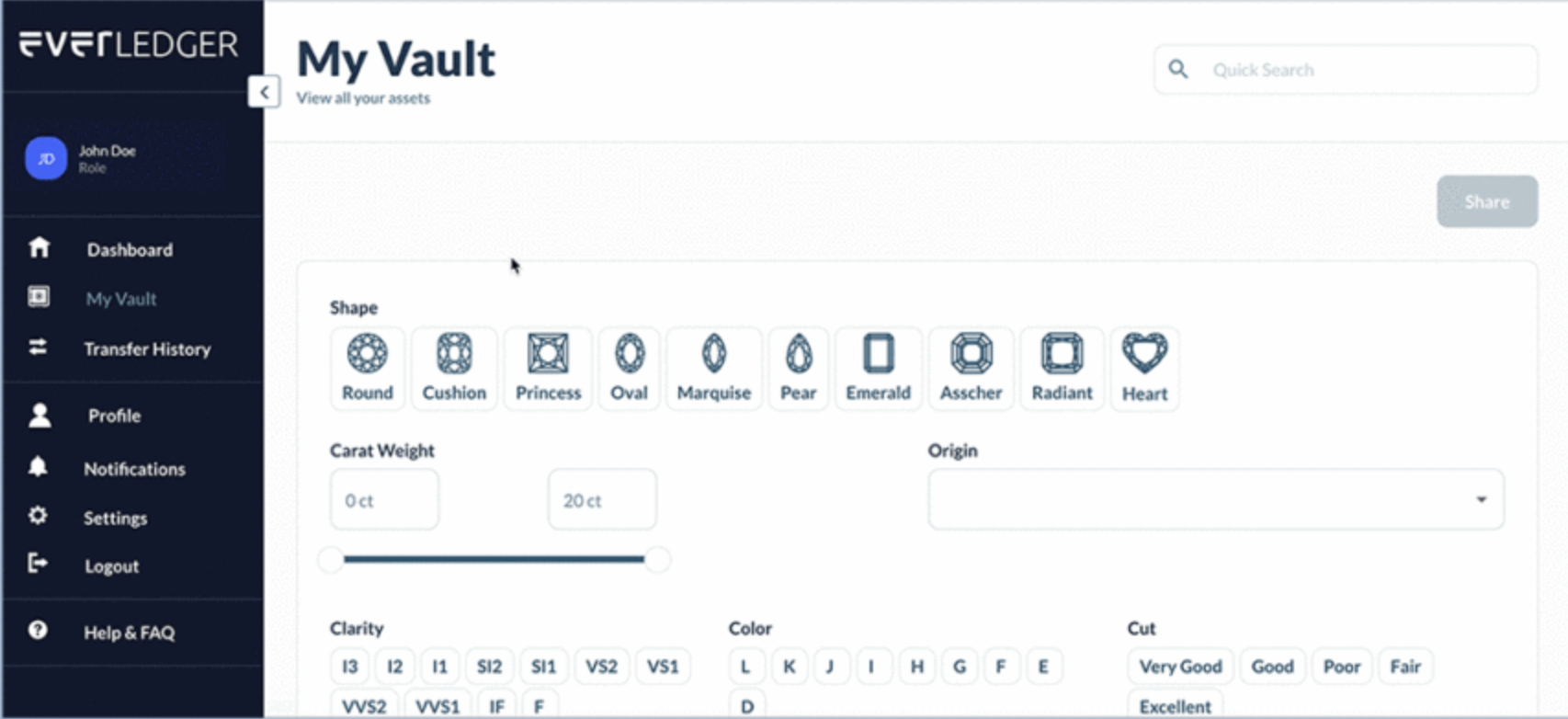
Everledger is a London-based startup that uses blockchain and AI to create digital identities for high-value assets like diamonds. Their solution helps jewelers verify a diamond’s origin, cut, and previous ownership. Everledger partners with insurers, retailers, and banks to reduce fraud and boost traceability.
Chow Tai Fook x GIA
Hong Kong-based jewelry retailer Chow Tai Fook partnered with the Gemological Institute of America (GIA) to place diamond grading reports on blockchain. This allows consumers to access their diamond’s certification using a simple mobile app. It’s an innovation that merges trust, technology, and customer experience.
Arianee
Arianee is a blockchain protocol focused on digital product passports. Several luxury watch and jewelry brands use Arianee to provide ownership certificates, resale tracking, and authentication through NFTs (non-fungible tokens). It’s an innovative way to add digital ownership to physical luxury.
Richemont & LVMH Blockchain Initiatives
Major luxury groups like Richemont (owner of Cartier) and LVMH (parent of Bulgari and Hublot) have launched blockchain initiatives like Aura Blockchain Consortium, designed to provide a unified system for product tracking and certification across the luxury sector, including jewelry.
Challenges and the Future of Blockchain in Jewelry
While blockchain offers immense promise, it’s not without challenges:
- Adoption Hurdles – Smaller players may lack the technical know-how or resources.
- Data Accuracy – Blockchain records are only as trustworthy as the input data.
- Standardization – The jewelry industry needs a unified standard for digital records.
Despite these challenges, the momentum is growing. Consumers are demanding more transparency, and blockchain is becoming a core technology in response. As governments, NGOs, and businesses prioritize ethical sourcing and traceability, blockchain is likely to become a standard in the jewelry world, not just a trend.
Conclusion
The jewelry industry is no stranger to beauty, history, and craftsmanship. But in today’s world, trust and transparency are just as important as carats and cut. Blockchain is enabling a future where every piece of jewelry tells a verified story—from the mine to the moment it’s worn.
For businesses, it’s a chance to innovate and connect with customers on a deeper level. For consumers, it’s a way to shop with confidence, knowing that their treasures are as authentic and ethical as they are beautiful.
As technology continues to evolve, one thing is clear: blockchain and jewelry are forming a bond that, much like a diamond, is built to last.
Leave a Reply